
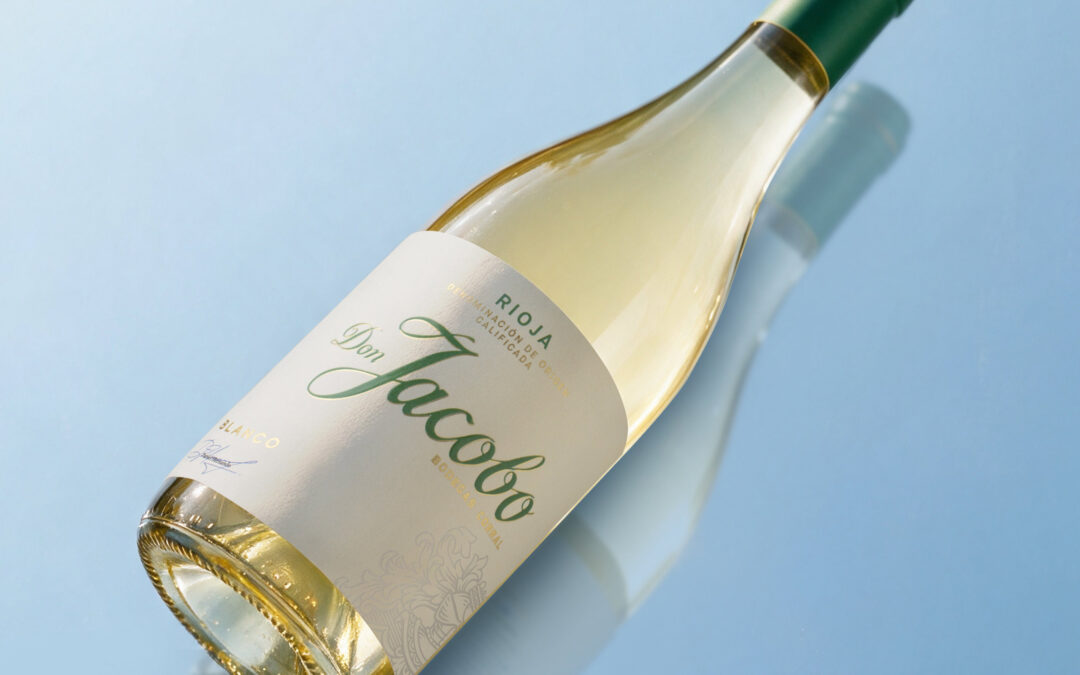
Don Jacobo Blanco 2025: a white wine from Rioja made with Viura grapes
Are you looking for a fresh, balanced Rioja white wine with character? At Bodegas Corral, we have a wine that deserves a place at your table. It’s called Don Jacobo Blanco 2025, and it’s much more than just a white wine designed to pair with a meal: it’s a way of understanding the vineyard, respecting the environment, and expressing the unique characteristics of a region with a long winemaking tradition.
Don Jacobo wines are born along the French side of the Camino de Santiago, where our winery has been connected for decades to the culture of wine and to a landscape that is part of its identity. This unique location inspires a winemaking philosophy in which we are committed to viticulture that is respectful of nature.
And it is precisely in our vineyards where the story of this white wine begins.
A white wine from Rioja made from grapes grown in vineyards up to 60 years old
To produce Don Jacobo Blanco 2025, we select grapes from our vineyards located on the Moncalvillo hillside, at an average elevation of 400 meters above sea level. These are plots ranging in age from 40 to 60 years—a characteristic that adds value to the raw material and allows us to work with vines that are well-adapted to the specific conditions of this environment.
The altitude, soil conditions, and the experience accumulated by these vines all contribute to defining the character of the grapes. Because when it comes to making a good white wine, not everything begins in the winery. The vineyard, its location, and the care it receives play a major role in the final result.
As for its varietal composition, Don Jacobo Blanco 2025 combines three varieties: 80% Viura and 20% made from a blend of Maturana Blanca and Garnacha Blanca.
Viura, one of Rioja’s most representative white grape varieties, forms the foundation of the blend. It is complemented by Maturana Blanca and Garnacha Blanca, two varieties that add nuance and personality to the overall profile. The result is a wine that strikes a balance between freshness, fruit expression, and aromatic complexity, while remaining approachable.
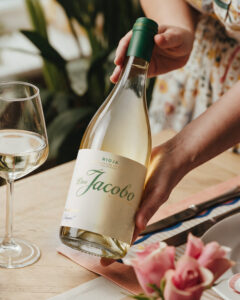 What does Don Jacobo Blanco 2025 taste like?
Let’s get to the point: what will you find when you open the bottle?
At first glance, it displays an attractive pale yellow color with greenish highlights—clean and bright. An appearance that gives a pretty good hint of what’s to come.
On the nose, aromas of white fruits—especially pear and apple—dominate, accompanied by citrus notes and a delicate floral undertone. A fresh and expressive aromatic profile that invites you to take another sip.
On the palate, it maintains that same freshness. It’s a well-balanced wine, with vibrant acidity that supports its structure and adds dynamism. The finish is elegant, with hints of fresh fruit and a subtle mineral nuance that rounds out the overall experience.
After fermentation, the wine ages for three months in the bottle before being released to the market. This period is part of its winemaking process and ensures it reaches your glass in the best possible condition.
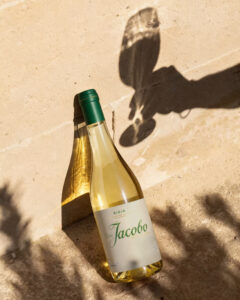 What should you pair with a Rioja white wine like Don Jacobo?
Versatility is one of the great appeals of white wines. Don Jacobo Blanco 2025 pairs especially well with fish, seafood, rice dishes, salads, vegetables, and Mediterranean cuisine.
It’s also a good choice to pair with appetizers, mild cheeses, or casual meals where you’re looking for a fresh wine that complements the food without overshadowing it.
And here’s a tip: don’t reserve white wines exclusively for summer. Their freshness and versatility make them wonderful companions all year round.
Don Jacobo Blanco 2025: tradition, vineyards, and a commitment to the Region
At Bodegas Corral, we understand that making wine involves much more than simply transforming grapes. It means caring for the landscape, respecting the environment, and maintaining a connection with the land around us.
Don Jacobo Blanco 2025 embodies this philosophy through a Rioja white wine that combines traditional grape varieties, old-growth vineyards, and winemaking techniques designed to preserve its freshness and varietal expression.
Because some wines don’t need a long introduction: just open the bottle, serve it at the right temperature, and let it speak for itself.