Wine throughout the history of the Camino de Santiago: tradition, culture, and hospitality
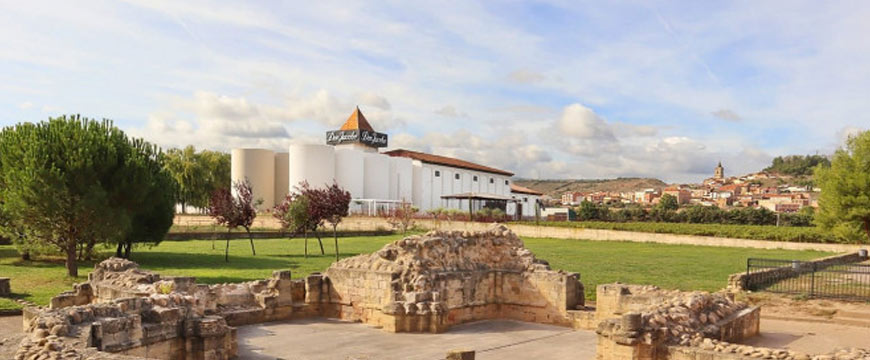
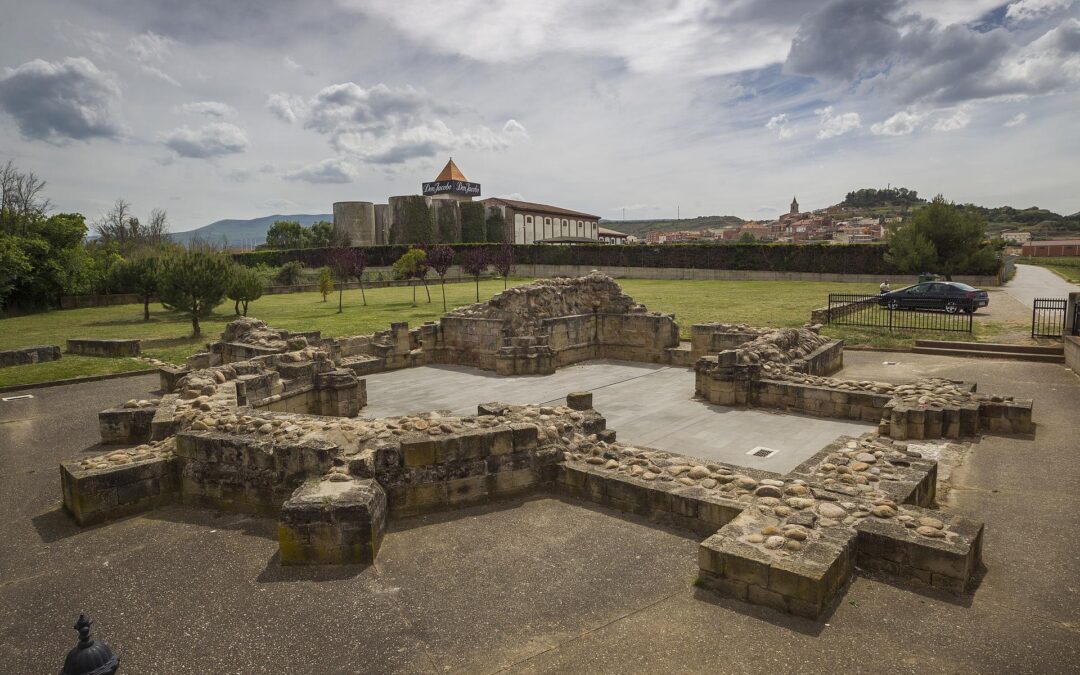
There are places where history isn’t just told—it’s walked upon. In our case, it’s also savored. On many of our wine-tasting tours, a must-see stop is the old Hospital de San Juan de Acre, located just a few steps from our winery. This site, steeped in history, served for centuries as a refuge for pilgrims traveling the Camino de Santiago in search of rest and shelter.
And the truth is, the Camino doesn’t just pass nearby. It literally passes right by our door.
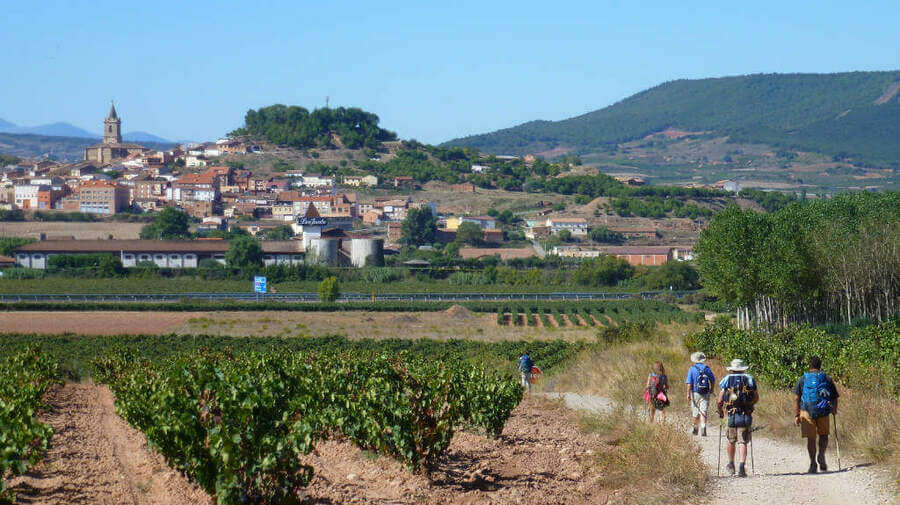
Every year, thousands of pilgrims walk past Bodegas Corral, backpacks on their shoulders, stories in tow, and dust on their boots. Some stop to explore our wine tourism offerings; others continue on their way, but all are part of a living current that connects past and present. From here, where winemaking tradition and the Way of St. James intertwine so naturally, we invite you to discover the deep connection between wine and the Camino de Santiago.
A decisive boost for the medieval vineyard
When the Camino de Santiago began to establish itself in the Middle Ages as one of Europe’s major pilgrimage routes, thousands of people crossed the northern part of the Iberian Peninsula each year. This constant flow of travelers transformed not only towns and cities but also the agricultural landscape.
The demand for food and drink grew steadily, and wine quickly became an essential product. As a result, regions such as Navarre, La Rioja, El Bierzo, and Galicia experienced significant growth in winemaking. New vineyards were planted, cultivation techniques were improved, and production was organized to supply an increasingly large traveling population.
This was not merely a matter of consumption. Wine generated trade, revitalized local economies, and helped anchor the population in rural areas. It was, in short, a key cog in the economic machinery of the Camino.
Monasteries: Guardians of knowledge and wine
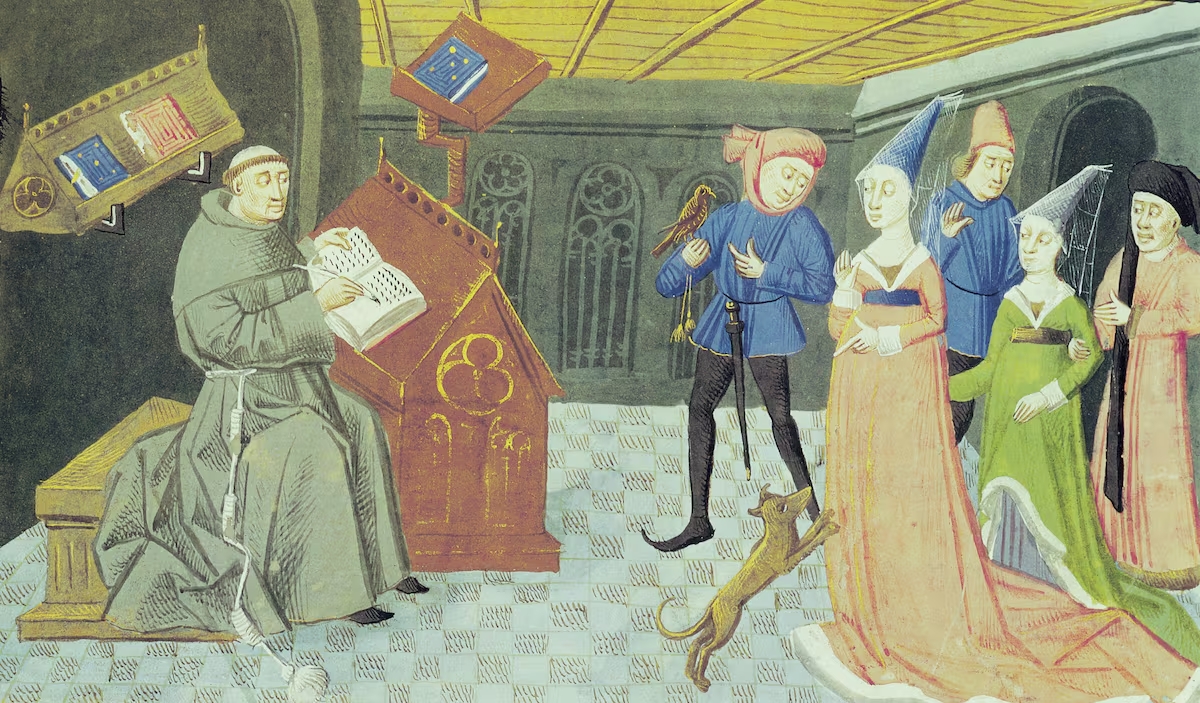
If there is one key player in this story, it is the monastic world. Along the Camino, religious orders—especially the Benedictines—played a decisive role in the expansion of vineyards.
For them, wine was not a luxury, but a necessity. It was part of Christian liturgy and essential for the celebration of the Eucharist. But monasteries also served a hospitable function: welcoming, feeding, and caring for pilgrims.
This led them to cultivate their own vineyards, build cellars, and refine winemaking techniques. Around these centers, true hubs of agricultural innovation emerged. Knowledge was developed regarding grape varieties, preservation methods, and production systems that, over time, spread throughout the region.
Every sip of wine on the Camino carried with it, in a way, centuries of knowledge accumulated within the walls of these monasteries.
Wine as sustenance and solace
Today we associate wine with pleasure, fine dining, or leisurely enjoyment. But in the Middle Ages, its purpose was much more practical. For pilgrims, wine was food, energy, and, in many cases, a safer alternative to water.
Sanitary conditions at the time meant that water was not always safe to drink. Wine, thanks to its alcohol content, offered greater assurance. It also provided calories and helped pilgrims endure long days of walking.
Imagine for a moment the physical effort of walking mile after mile with limited resources. In that context, a glass of wine wasn’t a luxury: it was a small comfort, a gesture of care, almost a liquid embrace halfway along the journey.
The French Way: a route through vineyards
Of all the pilgrimage routes to Santiago, the French Way is undoubtedly the most iconic. And it is no coincidence that it passes through some of Spain’s most important wine-growing regions.
From Navarre to Galicia, pilgrims journey through landscapes where vineyards are a constant feature of the horizon. This route not only facilitated the exchange of goods but also of knowledge. Cultivation techniques, winemaking styles, and traditions traveled from one region to another alongside the people.
The Camino thus became a true cultural artery of wine—a space where influences mingled, practices were shared, and a common identity was forged around viticulture..
The testimony of the Codex Calixtinus
The importance of wine on the Camino is not a modern interpretation. As early as the 12th century, the Codex Calixtinus—considered the first pilgrim’s guide—contained explicit references to the quality of wines in various regions.
Its pages describe areas such as the Irache region in Navarre, highlighting its agricultural wealth with mentions of its “good bread and excellent wine.” These words reflect not only a productive reality but also the value placed on wine as a distinctive feature of the region.
It is fascinating to think that, nearly a thousand years ago, pilgrims were already seeking out, appreciating, and remembering the wines they encountered along their journey.
A tradition that lives on
Far from disappearing, this connection between wine and the Camino de Santiago has survived to the present day with surprising vitality.
One of the best-known examples is the free wine fountain for pilgrims at Bodegas Irache in Navarre. This simple yet deeply symbolic gesture keeps the tradition of Jacobean hospitality alive. Offering wine to the traveler remains a way of welcoming, sharing, and accompanying them.
But it is not the only example. Along the route, numerous wineries, restaurants, and lodging establishments continue to integrate wine into the pilgrim’s experience—not merely as a product, but as part of a narrative that bridges the past and the present.
Wine as the central theme of an experience
If you decide to walk the Camino, you’ll discover that wine appears in many different forms. Sometimes it’s a glass at the end of the day; other times, it’s a conversation shared with strangers who soon become friends. On occasion, it’s part of a simple meal; at other times, it takes center stage in a more elaborate experience.
In every case, it serves a purpose that goes beyond the culinary. Wine connects. It connects with the land, with history, with people.
And that is precisely where its true value lies on the Camino de Santiago.
Looking to the past to understand the present
When we talk about wine throughout the history of the Camino de Santiago, we aren’t simply reciting historical facts. We are acknowledging a legacy that continues to shape the way we understand wine today.
Each bottle is, in a way, the heir to centuries of tradition. Every vineyard along the Camino is part of a shared history. And every toast, no matter how small, connects to a chain of experiences dating back to the Middle Ages.
We look forward to seeing you at Bodegas Corral
If you ever walk the Camino, or if you simply feel like coming to discover this story from the inside, our doors are open to you.
Whether you arrive as a pilgrim, with the noble weariness of someone who has walked many miles, or as a wine tourist in search of new experiences, at Bodegas Corral you’ll find a place where wine and the Camino continue to converse every day.
We invite you to explore all our offerings and plan your visit in the wine tourism section of our website.
Because here, where the Camino passes right by the winery, every glass has a story to tell. And perhaps, when you come, you too will become part of that story.