

How to store wine in summer: tips for keeping it in top condition
Summer arrives with its endless light, its terraces full of life, and that heat that invites us to cool off with a drink in good company. But it also brings with it a silent enemy for our home wine cellar: high temperatures. At Bodegas Corral, we know that a poorly stored bottle can turn a wonderful experience into a disappointment. That’s why today we want to talk about how to store wine during the hottest months of the year.
Because yes, wine is much more than a drink: it is history, culture, and territory bottled. It is as delicate as it is exciting, and if we do not take care of its storage conditions, it suffers. The key question is: how can we deal with the summer heat to keep wine in its best condition?
Heat, the silent enemy
Wine is a living thing. It evolves in the bottle thanks to chemical reactions that depend on factors such as temperature, light, and humidity. In summer, when the thermometer rises relentlessly, temperature becomes a real challenge.
At temperatures above 20-22 degrees, wine begins to suffer. Its aromas can be altered, its nuances can become flat and, in the most extreme cases, that dreaded vinegary smell can appear, ruining any toast. If we also leave the bottles exposed to direct sunlight, the risk increases: we are talking about the so-called light taste, a defect that transforms its profile into something unpleasant and lacking in personality.
So, how should you store wine at home during the summer?
The good news is that you don’t need a professional wine cellar to take care of your wines. With a few practical tips, you can ensure that your bottles arrive at the table in perfect condition.
- Find the coolest spot in the house.
If you don’t have a dedicated space, it’s best to choose an interior room, away from windows and heat sources. A built-in closet, basement, or even a dark pantry can be ideal allies. - Control the temperature
The optimal storage range is between 54 and 61 degrees Fahrenheit. We know that in the middle of August this is difficult without help, but the important thing is to avoid sudden spikes. It is better to have a slightly higher but stable temperature than a constant rise and fall. - Keep it dark
Light, both natural and artificial, accelerates the oxidation of wine. Therefore, storing bottles in a dark place is essential. Even if we keep them on a shelf, we can cover them with a cloth or store them in their original cardboard boxes. - Horizontal position
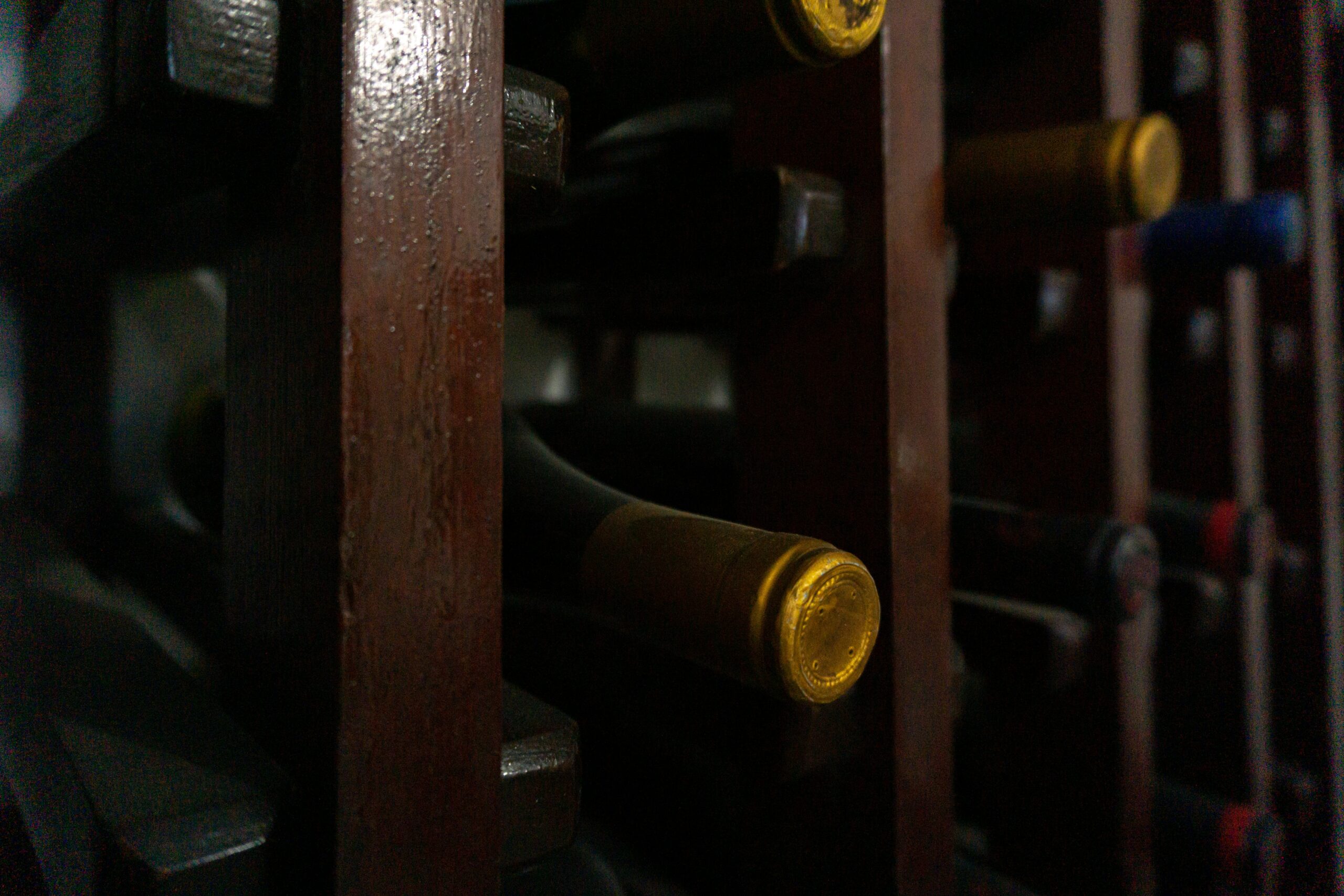
Storing bottles horizontally ensures that the cork remains moist, preventing it from drying out and allowing oxygen to enter the bottle. This simple but crucial detail prolongs the life of the wine. - Avoid vibrations
Constant movement also affects the evolution of wine. Therefore, do not leave bottles next to appliances such as washing machines or refrigerators.
What if we have a refrigerator?
Here comes one of the classic questions. Storing wine in a domestic refrigerator can be a temporary solution for whites, rosés, or sparkling wines that we are going to enjoy in a few days. However, it is not a recommended place for reds or for long-term storage: excessive cold and lack of humidity dry out the corks.
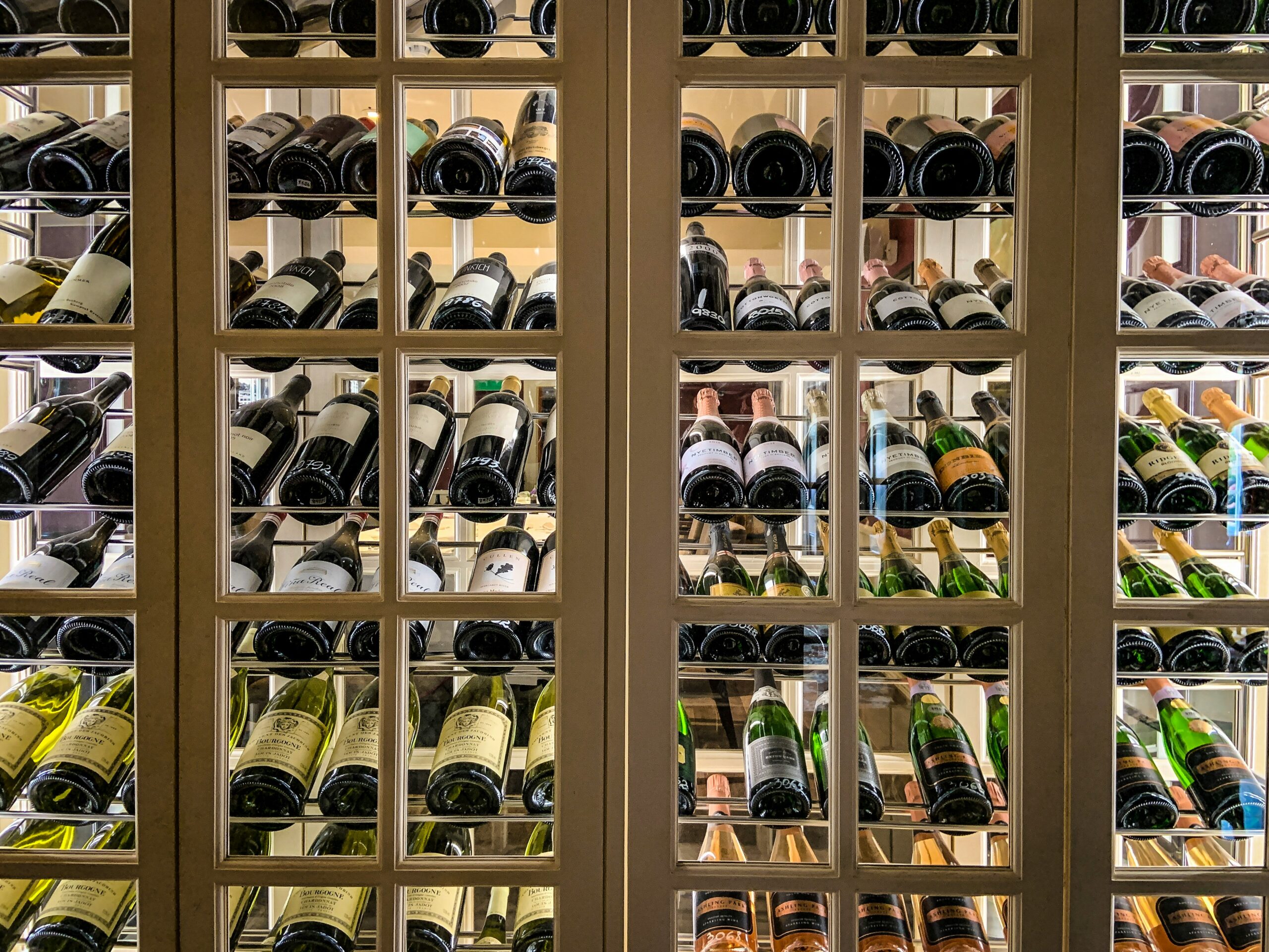
If we are true wine lovers and want a practical and long-lasting solution, there is the option of investing in an electric wine cooler. These small appliances maintain a stable temperature, ideal for young wines or those for regular consumption.
Humidity, the great forgotten factor
When talking about how to store wine, we tend to focus on temperature, but humidity plays an equally important role. Ideally, it should be kept between 65% and 75%. In environments that are too dry, the cork can shrink and let air in. Conversely, excessive humidity could damage the labels and give our collection a neglected appearance.
In a normal home, we cannot always measure or control this factor, but small tricks such as placing a container of water near the bottles (without direct contact) help to balance the environment.
Wines that suffer most in summer
Not all wines respond equally to heat. Young whites and sparkling wines are particularly sensitive: they lose their freshness easily. The same is true of long-aged reds, whose aromatic complexity can suffer if they are not stored properly.
On the other hand, fortified or generous wines, such as sherry, tend to be more resistant thanks to their higher alcohol content. However, that does not mean we can neglect them: all wines deserve a minimum of care and respect.
The importance of planning consumption
Another useful tip is to organize our consumption according to the time of year. In summer, it may be a good idea to reduce the number of long-term storage bottles at home and opt for wines that can be consumed more quickly: fresh whites, rosés, and young reds. This way, we avoid putting bottles that need a more controlled environment at risk.
The role of the wine cellar
In large wine houses, such as wineries, this problem has been thoroughly studied. There, we have facilities designed to maintain constant temperature and humidity, without direct light or vibrations. But in our homes, we can draw inspiration from this tradition and adapt it on a small scale.
Wine is cultural heritage, a product that has accompanied humanity for centuries. Learning how to care for it in summer is a way of honoring that legacy.
Quick tips to avoid failure
- Never leave a bottle in the car for hours in the sun.
- Avoid storing wine in the kitchen, where temperatures fluctuate constantly.
- If you live in very hot areas, it is worth setting aside a small space with temperature control, even if it is just a wine cooler.
- Remember that wine breathes: the bottle needs stability and silence.
To sum up…
Summer can be challenging, but it is also an opportunity to get even closer to the world of wine and understand its fragility. With a little care and a few simple steps, we can ensure that each bottle retains its essence, ready to accompany a family meal, a chat with friends, or a moment of personal calm.
At Bodegas Corral, we know that wine is not only made: it is also cared for, protected, and shared. Because every glass holds a story, and our job is to make sure that story remains intact until the last sip.
So this summer, when the heat is on, let’s remember that knowing how to store wine is the key to continuing to enjoy what we love most: opening a bottle and toasting to what really matters.