Graciano in Rioja: the grape that gives character, freshness and soul to our wines
In Rioja, every vine tells a story. Among the oldest and most resilient is the Graciano grape, a variety that, though modest in size, shines on its own for its elegance, freshness, and remarkable ability to defy time. At Bodegas Corral, we feel a special admiration for it. Perhaps because, like our wines, Graciano has learned to endure, evolve, and stay true to itself when others might have chosen the easy path.
Resilience turned into vineyard
Graciano is a late-ripening grape, with small, compact clusters, thick skin, and an intense aroma. It doesn’t make life easy for the grower: it demands poor soils, low yields, and endless patience, since it’s usually harvested at the end of October—when other varieties are already resting in the cellar. Yet it is precisely this wait that makes it unique. Its naturally high acidity, deep color, and complex aromatic profile make it an oenological gem for those who can see beyond immediacy.
You could say Graciano is the grape for romantics—those who believe that true quality grows slowly, in tune with the land. Fittingly, its name evokes grace, that innate elegance which doesn’t impose itself, but rather reveals itself little by little, glass by glass.
A unique character in Rioja
Within the universe of the Rioja Qualified Designation of Origin, dominated by Tempranillo, Graciano holds a special place. It doesn’t seek the spotlight, yet whenever it appears, it leaves a mark. Its contribution is essential in many age-worthy wines, acting as a bridge between power and elegance. It adds deep color, balanced acidity, firm structure, and enviable longevity.
In a region where time is an ally, Graciano becomes a guarantee of evolution. Winemakers love it for its ability to keep wines alive over the years—for that natural freshness that, even after long barrel aging, continues to vibrate on the palate. It’s the reason many aged Riojas retain their brightness and tension, making them truly unforgettable.
Its aromatic profile is also a sensory journey—think ripe black fruits, violet flowers, fine spices, and even a subtle mineral touch that recalls the soils and air of Rioja Alta. A variety that needs no adornment—just a chance to speak for itself.
History and revival of a minority grape
For decades, Graciano was an endangered species. Its low yields and demanding nature led many growers to abandon it. But in recent years, something has changed. The search for authenticity, the pursuit of fresher wines with a clear sense of place, has brought Graciano back to the recognition it deserves.
At Bodegas Corral, we see this as a natural return. Because Graciano embodies the values that define us: patience, respect for the land, and fidelity to the terroir. In our vineyards in Rioja Alta, this variety finds its ideal habitat—altitude, poor soils, and a climate that allows it to ripen slowly while preserving its essence.
In the glass: intensity, freshness, and depth
To speak of Graciano is to speak of balance. Its deep cherry-red color, aromas of wild herbs, plum and blackberry, and its vibrant acidity that extends the finish make it perfect both for single-varietal wines and for blending with Tempranillo in pursuit of greater complexity.
On the palate, Graciano wines are structured, with firm tannins, great freshness, and an energetic sensation that invites another sip. They age beautifully, developing nuances of leather, cocoa, and fine spices. These are wines that don’t shout—but speak clearly.
Ultimately, Graciano has that rare ability to combine strength and delicacy, rusticity and elegance. Perhaps that’s why, when we decided to pay tribute to it in Altos de Corral, we did so with deep respect and admiration.
Our tribute to Graciano: Altos de Corral
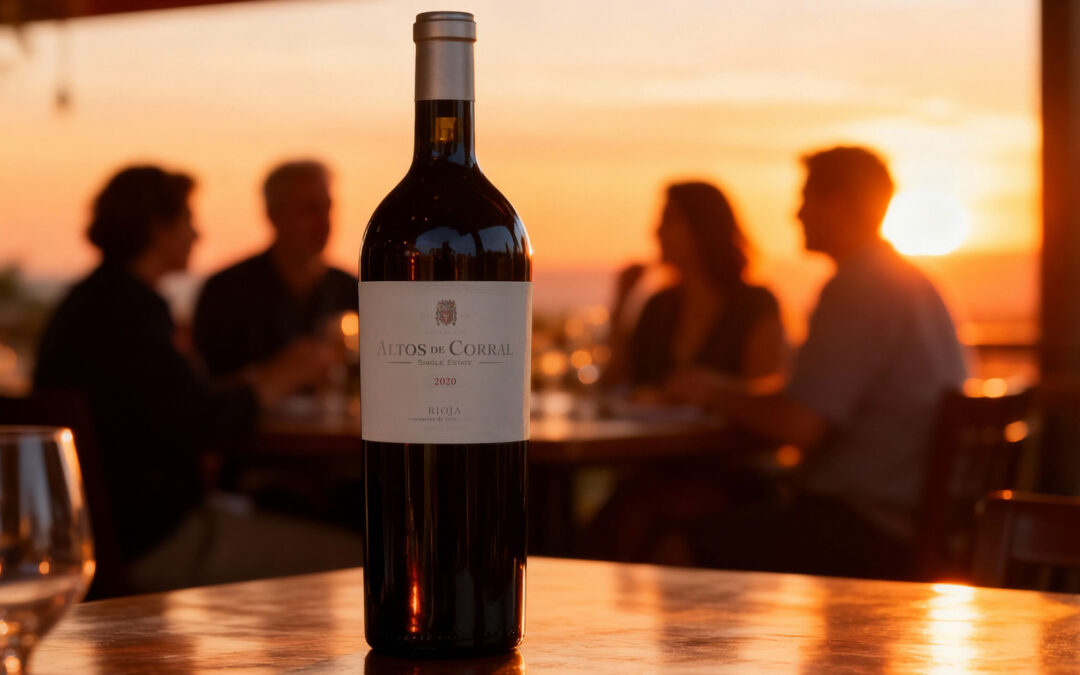
At Altos de Corral, Graciano not only appears—it shines in its rightful measure. It plays an essential role in our two most emblematic wines: Altos de Corral Single Estate Crianza and Altos de Corral Single Estate Reserva, both made in Rioja Alta from a single estate located over 600 meters above sea level.
Here, Organic Graciano (10%) accompanies Organic Tempranillo (90%) to express the soul of the terroir with authenticity. Its role is subtle yet decisive: it provides freshness, structure, and longevity, balancing Tempranillo’s ripeness and reinforcing the wine’s identity.
In Altos de Corral Crianza, after 12 months in new 225-liter French oak barrels, Graciano reveals itself through notes of ripe black fruit, wild herbs, and a mineral background that evokes the vineyard’s altitude. On the palate, the wine shows firm tannins, lively acidity, and a long finish—with the seriousness and structure that only Graciano can provide.
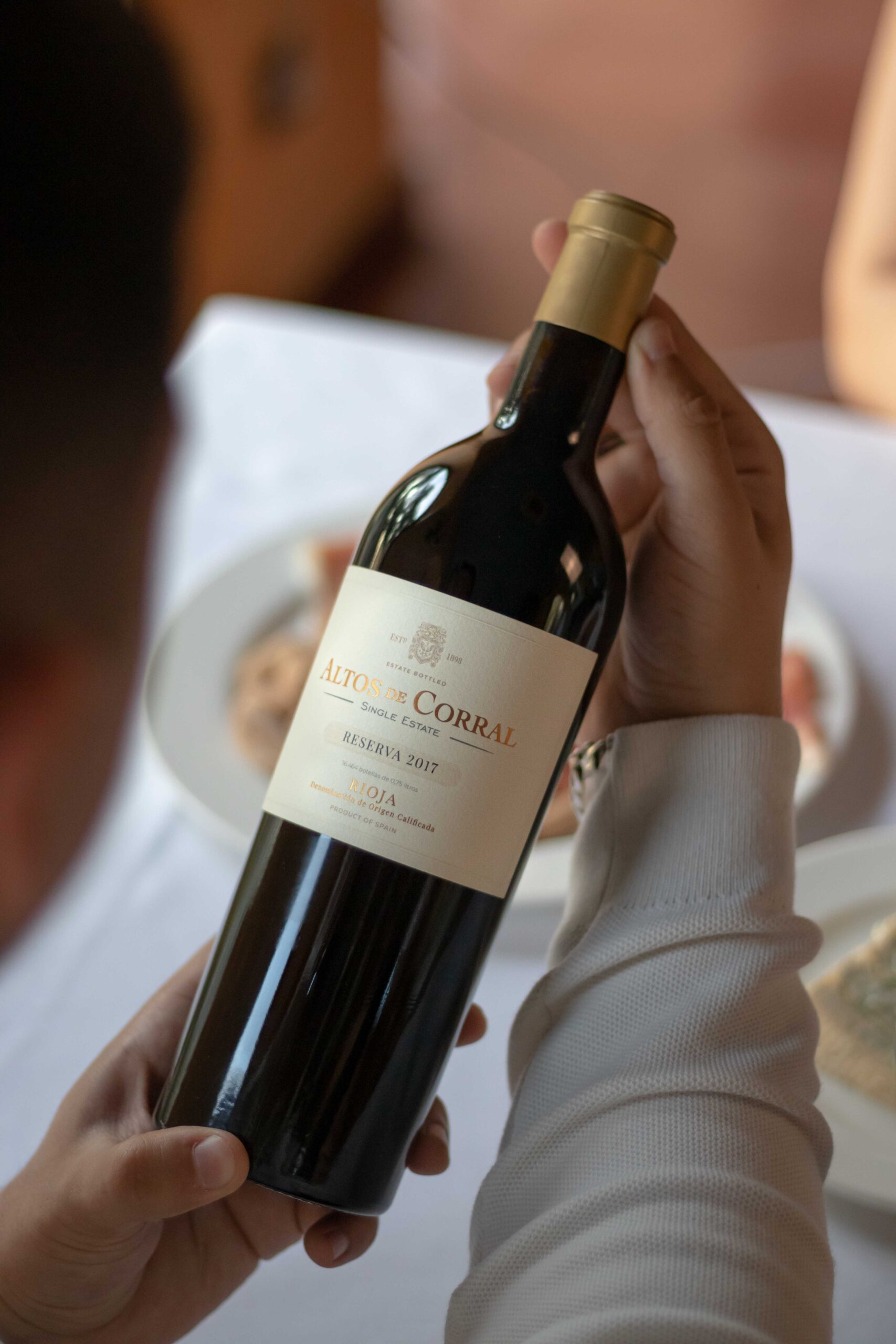
Meanwhile, Altos de Corral Reserva takes elegance to another level. Aged 24 months in French oak and six months in bottle, it rounds out Graciano’s expression—adding depth, tension, and that signature freshness that keeps the wine vibrant over time. On the nose, it offers black fruits, cocoa, fine leather, and the distinctive mineral touch of high-altitude soils.
Both wines embody what we understand as balance: the meeting of tradition and precision winemaking, of terroir and personality. And in that dialogue, Graciano always has the final word.
A tribute to our origins
For us, Graciano is not just another variety. It’s a statement of principles. In a world where immediacy often overshadows what truly matters, it reminds us of the importance of patience, care, and respect for the land.
At Altos de Corral, every vintage is a tribute to this grape that has remained faithful to its essence. A grape that, through quiet persistence, gives our wines soul, character, and freshness. Because in Rioja—and especially in our estate—Graciano doesn’t just belong to history; it writes it with every harvest.
And so, glass in hand, we continue to honor one of the most authentic varieties of our land. Because in every sip of Altos de Corral, you can feel the living heartbeat of Graciano—the grape that gives character, freshness, and soul to our wines.