When to open a wine for aging? The definitive guide to enjoying the best wines from Rioja Alta at their perfect moment
Buying a special bottle is both ceremonious and daunting. We choose it with care, store it as if protecting a small treasure, and then suddenly the big question arises: when to open it? In the world of Rioja Alta wines, where elegance and aging potential are hallmarks, knowing how to identify the perfect moment can make the difference between a good experience and a memorable one.
Today we want to help you make that decision. Because a wine for aging is not just a drink, it is a story in transformation.
What exactly is a wine for aging?
We call a wine “wine for aging” when it has been made with sufficient structure, concentration, and balance to evolve favorably over the years. In regions such as Rioja Alta, where the Atlantic climate and diverse soils provide freshness and natural acidity, many red wines are born with the potential for long-term aging.
But beware: not all wines improve indefinitely. Aging is a curve, not an infinite upward line.
The curve of evolution: youth, prime, and decline
Let’s imagine a bell curve. At the far left, we find young, vibrant wine with primary fruit and nerve. As time passes, the wine enters a phase of integration: the wood blends with the fruit, and spicy, balsamic, and tertiary nuances appear. This is the highest point of the bell curve, the moment of fullness.
Then, slowly, the fruit loses intensity, the aromas become more delicate, and the structure refines. If we wait too long, the wine can decline.
The key is to identify that peak. And that’s where knowledge and intuition come in.
Factors determining storage capacity
Not all Rioja Alta wines evolve in the same way. Several factors influence their longevity:
- Grape variety: Tempranillo, the backbone of the region, combines acidity and tannins, two pillars of aging.
- Tannic structure: Tannins act as the skeleton of the wine.
- Acidity: This is the backbone that sustains freshness over time.
- Barrel aging: Contact with wood provides stability and complexity.
- Concentration and balance: Without harmony, there can be no elegant aging.
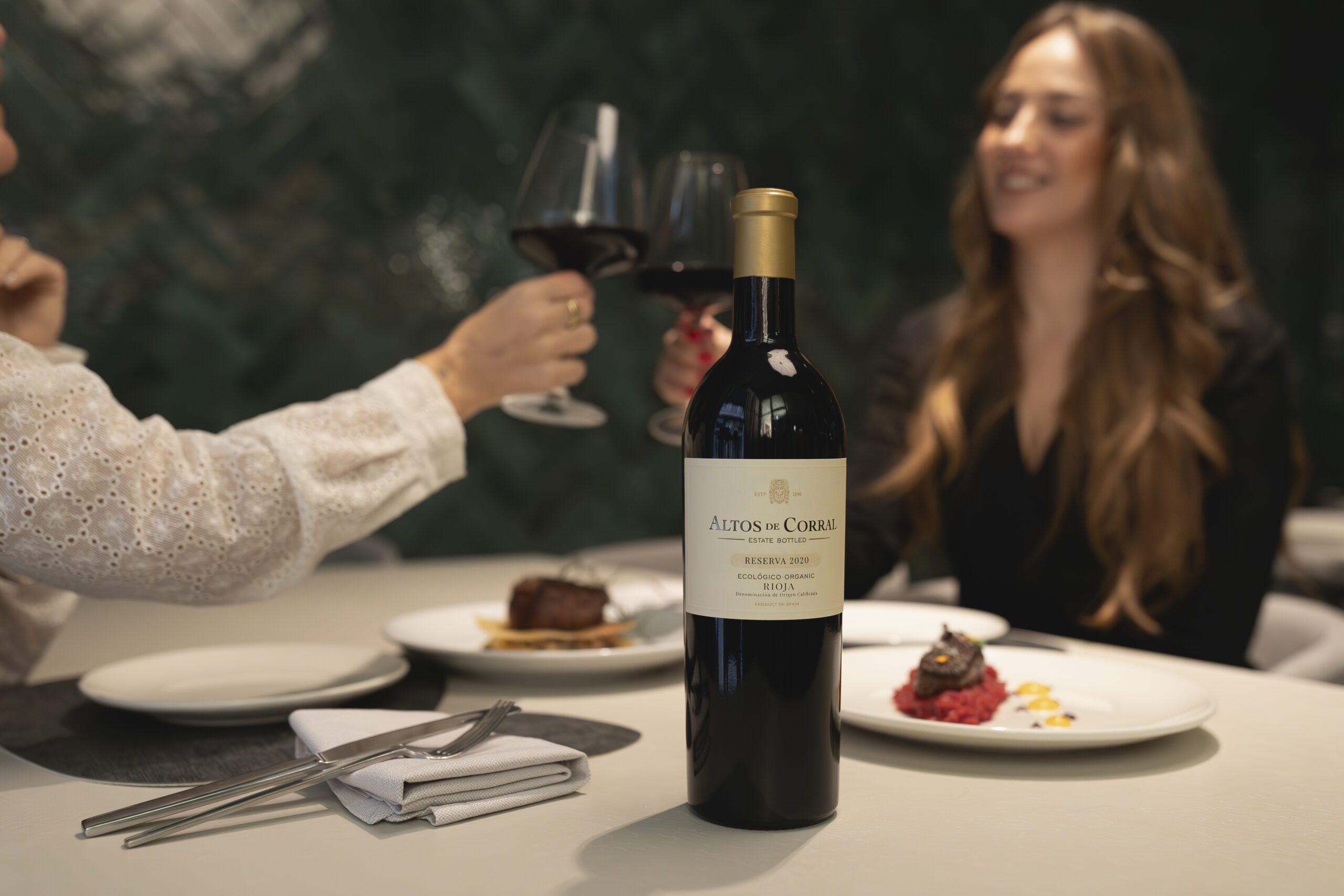
In our winery, wines such as Altos de Corral Single Estate Crianza are born with that combination of fruit, freshness, and structure that allows them to be enjoyed both in their youth and after several years in the bottle. Their balance makes them an ideal choice for those who want to enter the world of aged wines without taking risks.
Altos de Corral Single Estate Reserva, on the other hand, is designed for a longer journey. Its longer aging time and structure place it in the Rioja Alta Reserva category, which invites patience and rewards with complexity.
Sensory cues: how to know if it’s at its best
We don’t always have access to detailed technical specifications or precise recommendations. That’s why learning to read wine is essential.
1. Color
In wines suitable for aging, the intense violet-red color of youth evolves into garnet and brick red tones. A slight orange rim is not a defect, but a sign of maturity. If the color appears dull or excessively brown, it may indicate that the wine has passed its peak.
2. Aromas
Fresh fruit gives way to ripe fruit, then to notes of leather, tobacco, damp forest, and sweet spices. This transition is natural. The optimal point is usually found when fruit is still present, accompanied by tertiary complexity.
If, upon uncorking, we perceive dull, excessively volatile, or flat aromas, it is possible that the wine has begun to decline.
3. Palate
A Rioja Alta wine at its peak offers polished tannins, integrated acidity, and persistence. If we notice that the structure has collapsed and the finish is short, we may have waited too long.
 How many years should we wait?
Here comes the answer you least want to hear: it depends.
- A Rioja Alta crianza wine is at its best between 5 and 8 years after harvest.
- A Rioja Alta reserva wine is usually at its best between 8 and 15 years after harvest.
- Great single vineyard wines can easily exceed these figures.
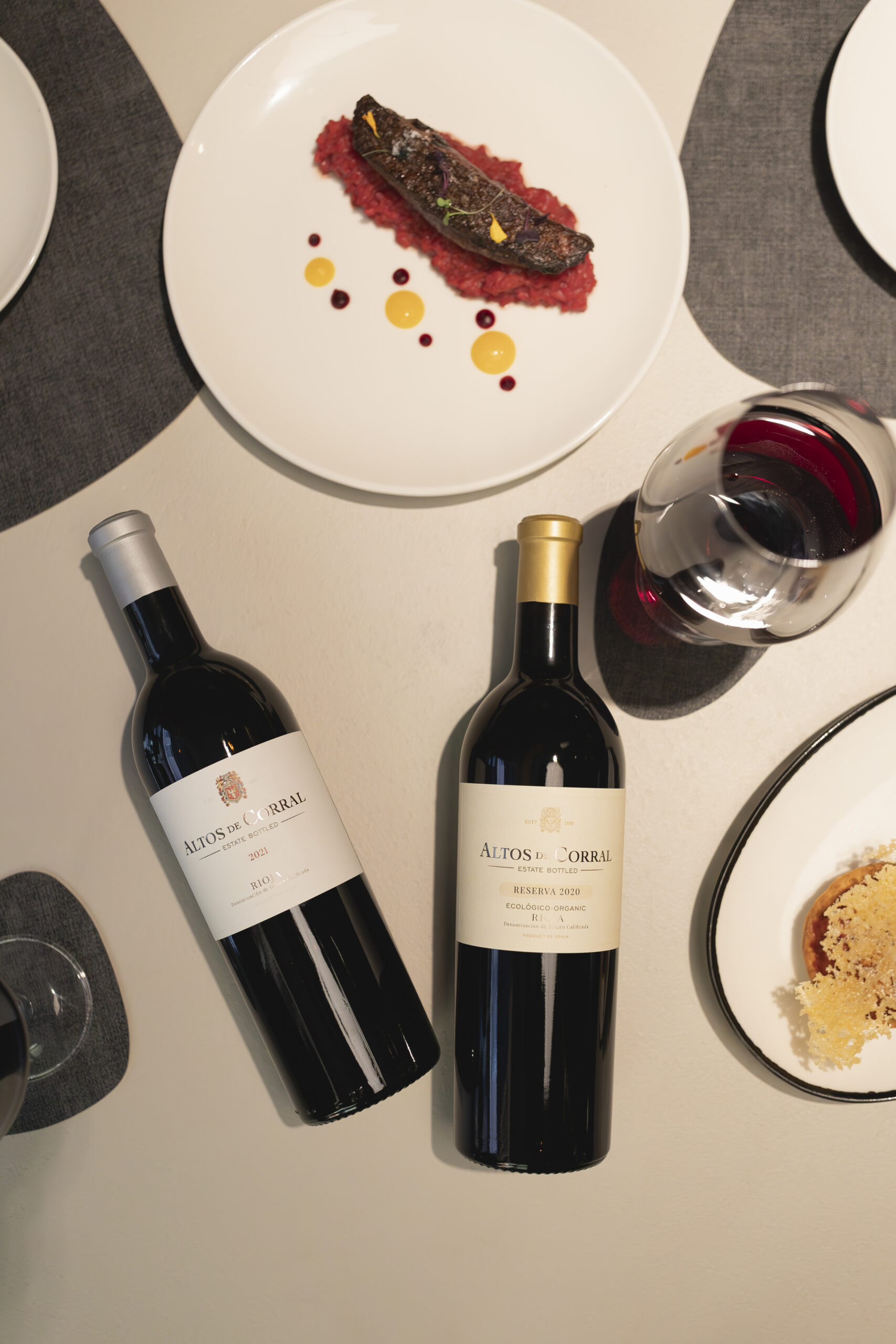
In the case of Altos de Corral Single Estate Crianza, we recommend enjoying it between 4 and 10 years, depending on the vintage and personal taste. For Altos de Corral Single Estate Reserva, the margin is wider and allows for a more leisurely evolution, ideal for special celebrations.
Practical tips for storing wine for aging
Just as important as knowing when to open it is knowing how to store it.
- Constant temperature between 12 and 15 degrees Celsius.
- Darkness: light accelerates aging.
- Adequate humidity to protect the cork.
- Bottle in a horizontal position.
A cool interior closet can work if there are no sudden changes in temperature. It is not essential to have a professional wine cellar, but it is important to avoid the kitchen or spaces with heat.
Open now or wait? Three key questions
When we hesitate over that special bottle, we can ask ourselves:
- Is this a once-in-a-lifetime occasion?
- Do we prefer fresh fruit or tertiary complexity?
- Do we have another bottle to compare it with in the future?
Experience is also built up through tasting. Opening a bottle today and another in five years’ time is a practical lesson in the evolution of wine that no manual can replace.
The emotional factor
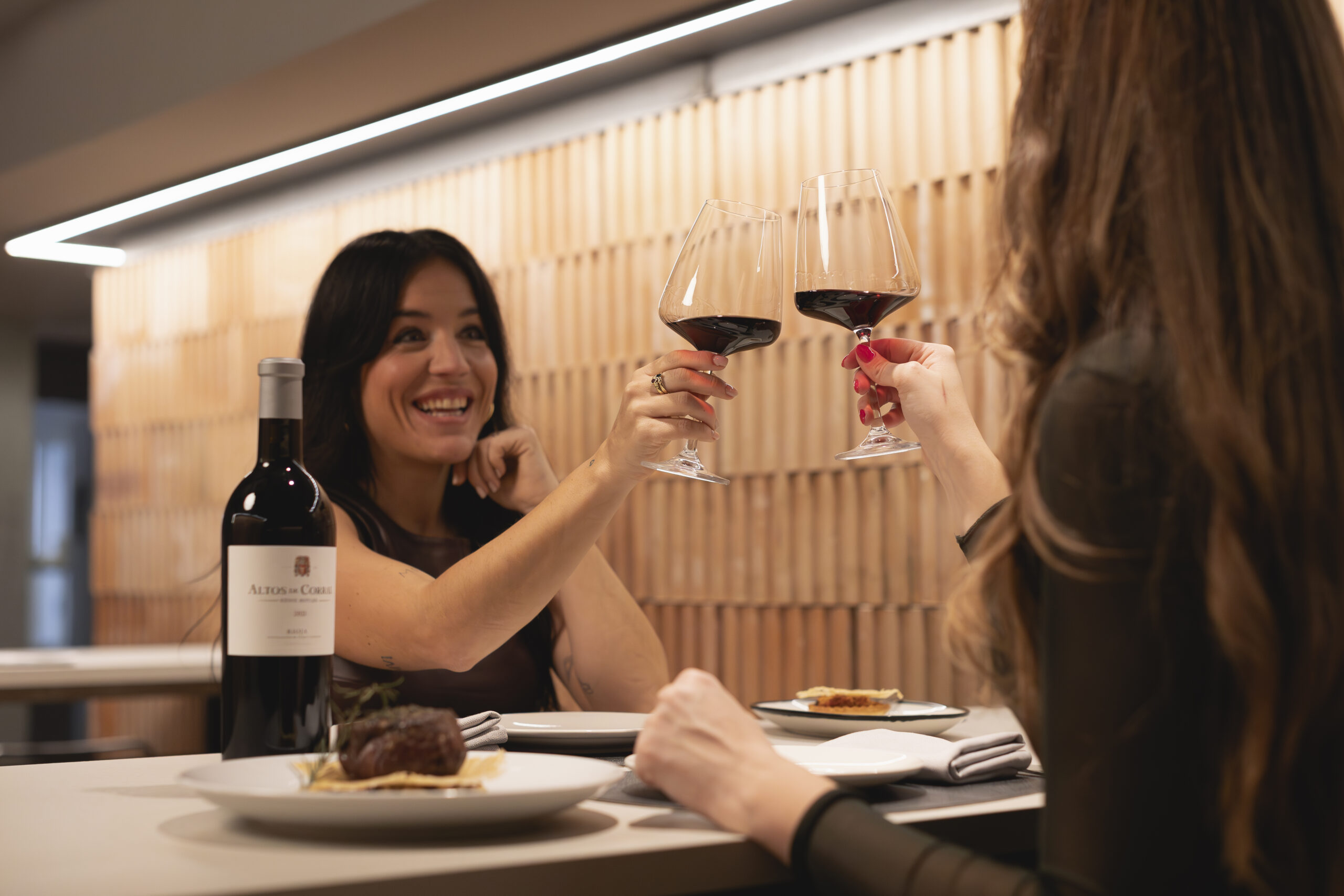
There is one component that rarely appears in technical specifications: the right moment. A wine may technically be at its peak, but if there is no company or context, something is lost. Sometimes the best moment is not dictated by the evolution curve, but by life itself.
An anniversary, a reunion, a goal achieved. Aged wine makes sense when celebrating something.
The pleasure of deciding
Ultimately, opening a Rioja Alta wine for aging is an act of trust. Trust in the work done in the vineyard, in the winery, and in time. There is no single perfect moment, but rather a window of enjoyment.
Our final recommendation is clear: don’t turn the bottle into an untouchable object. Wine is made to be shared. Study the vintage, get to know its style, follow the sensory cues and, above all, listen to your intuition.
Because the real mistake is not opening it too soon. The real mistake is waiting so long that the wine fades away silently.
And that, in the case of the great wines of Rioja Alta, would be to lose a story that deserved to be told at the table.